
The oil and gas industries put the most stress on pipeline fittings than any other industry. Pressure spikes, corrosive media, remote installations and zero tolerance for leaks mean that component selection is a high-stakes decision. Copper compression fittings have a permanent place in that infrastructure, not just because of inconsistent performance, but because they work well where welded or threaded alternatives have failed.
What Are Copper Compression Fittings?
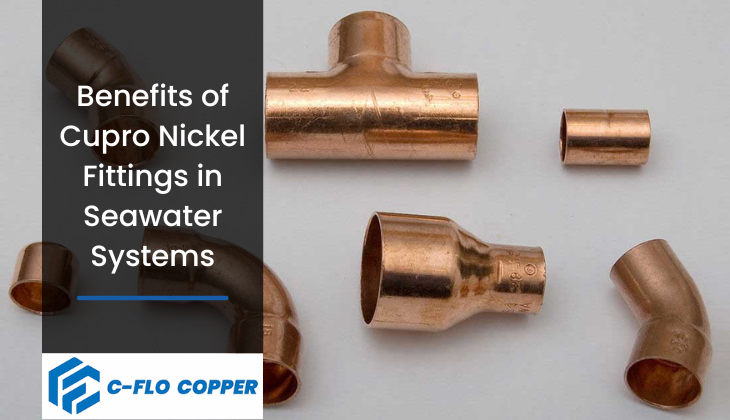
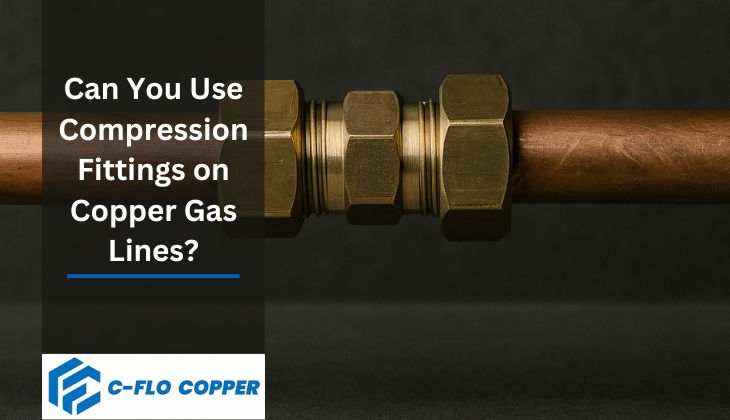
Copper compression fittings connect copper piping without soldering, welding, or open flame. Tightening the compression nut, ferrule and fitting body creates a leakproof mechanical seal. They are available in straight couplings, elbows, tees and reducers, covering pipe diameters from 6 mm to 108 mm. Each configuration handles a specific connection geometry, giving engineers the flexibility to build complex pipeline networks from a standardised component set.
Why Copper Compression Fittings Are Used in the Oil and Gas Industry
Oil and gas pipelines carry hydrocarbons, process gases, and treatment chemicals all the time. Copper compression fittings handle this demand because they seal without heat, which matters on active sites where welding clearances are restricted. Installation takes minutes, not hours, and requires no specialist certification for basic field joints. C-Flo Copper stocks a comprehensive range of compression fittings in all standard sizes so procurement teams can meet urgent site requirements without delays impacting production schedules.
The Role of Copper Compression Fittings in Oil and Gas Operations
Durability Under Extreme Conditions
Copper compression fittings have a working pressure of up to 600 bar and operating temperatures from -200°C to 250°C, depending on the size and wall thickness of the fitting. Offshore platforms and desert extraction sites both push components toward these limits daily. A fitting that cracks or deforms under thermal cycling forces an unplanned shutdown. Copper compression fittings resist both thermal fatigue and pressure-induced deformation, cutting unplanned maintenance intervals significantly over a standard 25-year asset life.
Corrosion Resistance That Holds in Aggressive Media
Oil and gas pipelines carry hydrogen sulphide, chloride-rich brine, and acidic condensate. These media attack carbon steel and standard alloy fittings within months. Copper forms a stable oxide layer on contact with oxygen, and that layer actively resists further corrosion rather than allowing it to progress. For subsea and wet-gas applications, this self-protecting behaviour reduces external coating requirements and extends service intervals by two to three inspection cycles.
Fast, Reliable Installation Without Specialist Equipment
A threaded compression nut tightened with a standard spanner produces a rated seal in under five minutes. It does not need torches, flux, or post-weld inspection. On brownfield sites where hot-work permits add 24 to 48 hours to any repair, this matters enormously. The fitting also allows disassembly and re-use, which threaded and welded joints do not offer without cutting and re-fabricating the line.
Performance in High-Pressure Service
Standard compression fittings in our range sustain working pressures across a broad service band, with the fitting geometry distributing load evenly across the ferrule contact zone. This prevents localised stress concentrations that cause fatigue cracking in high-cycle applications such as compressor discharge lines and wellhead control systems. The design eliminates the root-defect risk of socket-weld joints, which have crack initiation sites from incomplete fusion under cyclic loading.
Compatibility Across Pipeline Configurations
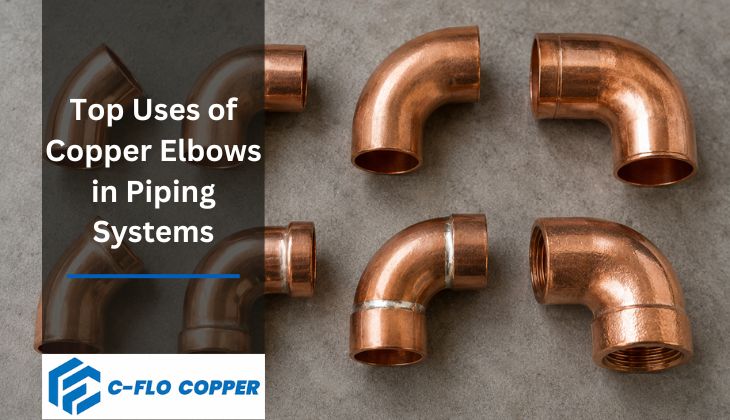
Compression fittings connect to metric and imperial pipe in the same range. Straight couplings join two runs; reducing couplings step between bore sizes within a single connection. Elbows at 90° and 45° route pipelines around structural members without fabricated bends. Tee fittings branch instrument lines from process headers without cutting the main run. This geometry coverage means a single product family handles the full scope of a pipeline network.
Best Practices for Installing Copper Compression Fittings
- Cut the pipe square and deburr both edges before assembly.
- Slide the nut and ferrule on before inserting the pipe into the fitting body.
- Push the pipe in fully until it seats against the internal shoulder.
- Hand-tighten first, then add one to 1.25 turns with a spanner.
- Stop at the manufacturer’s turn count; over-tightening deforms the ferrule and cracks the body.
- Support the pipe near the joint on vibrating equipment such as compressor skids.
- Pressure test every joint before the line enters service.
- Re-torque after the first thermal cycle, since copper and ferrule metal expand differently.
Factors to Consider When Selecting Copper Compression Fittings
- Rating of Pressure and Temperature: Match the rated working pressure of the fitting to the maximum operating pressure of the line, not the design pressure. Provide for safety margins for pressure surges.
- Pipe material and wall thickness: Compression fittings grip the outer diameter of the pipe. A thin-wall tube requires insert supports to prevent the ferrule from collapsing the bore on tightening.
- Media compatibility: Copper resists most hydrocarbons and process gases, but hydrogen-rich service and certain amines attack copper alloys. Confirm media compatibility before specifying.
- End connection type: Check whether the mating equipment uses metric, BSP or NPT threads. Incorrect threads create false seals that fail under pressure.
- Fitting size range available: For large projects, check that the supplier has a full size range in stock. We have stock in the standard size range available for immediate dispatch to sites throughout India and the world.
Conclusion
Copper compression fittings solve real engineering problems in oil and gas operations, from fast field repairs to permanent high-pressure installations. Their ability to seal without heat, resist corrosion in aggressive media, and accommodate multiple pipeline geometries makes them a practical default for a wide range of applications. C-Flo Copper provide copper compression fittings with full technical support and rapid fulfilment from our stocked inventory. Contact our team to find availability and specifications for your next project.
FAQs
Why are copper compression fittings preferred in oil and gas pipelines?
Can copper compression fittings handle high pressure?
Are copper compression fittings corrosion resistant?
Do copper compression fittings require welding?
How long do copper compression fittings last?
What industries besides oil and gas utilise copper compression fittings?
By C-Flo Copper | December 15, 2023